While Parisian real estate continues to climb toward uncharted price per square meter highs, Bordeaux has quietly established itself as a compelling alternative for discerning buyers. Advanced valuation models now reveal a structural divergence: the capital’s density-driven market inflates costs, while Bordeaux delivers comparable architectural charm, modern amenities, and lifestyle quality at a significantly lower entry point. This isn’t just about affordability-it’s about smarter asset allocation in a city where space, light, and long-term appreciation converge.
The structural gap between Bordeaux and Paris real estate
At the heart of the disparity lies a fundamental difference in how square meters are valued. In central Paris, particularly in the 1st and 16th arrondissements, prices routinely exceed€10,000/m² for standard apartments, with premium Haussmannian properties commanding far more. Bordeaux, by contrast, sees average prices for high-end properties hover around €6,500/m², even in the most sought-after districts. This gap persists despite improved rail connectivity-proof that proximity alone doesn’t erase market fundamentals.
A difference in square meter valuation
The numbers speak clearly: what you can acquire in Bordeaux for a given budget often includes more usable space, higher ceilings, and outdoor areas-features routinely sacrificed in central Paris due to spatial constraints. For those seeking to secure their assets in a dynamic market, the decision to buy an apartment in Bordeaux France remains a strategic choice compared to the saturated Parisian landscape.
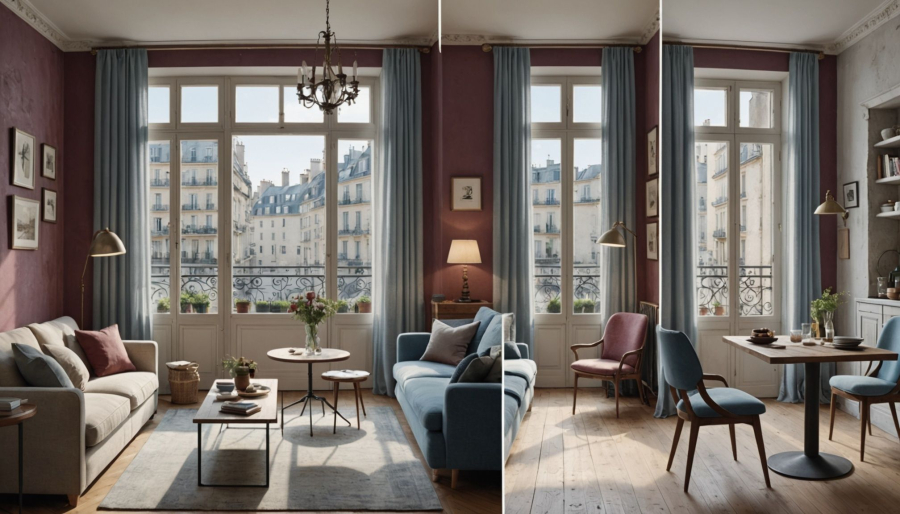
The premium on Parisian density
Paris’s extreme population density creates artificial scarcity. The result? Buyers often pay top euro for compact studios or two-bedroom units lacking storage, natural light, or outdoor access. In Bordeaux, the same investment unlocks larger layouts, many with balconies, terraces, or private gardens. The city’s urban planning allows for more breathing room-literally and financially-making it a more balanced proposition for long-term living or investment.
Supply and demand dynamics in the Southwest
Bordeaux’s market benefits from a healthier balance between supply and demand. Unlike Paris, where inventory is constrained by limited land and strict preservation laws, Bordeaux has room to expand. This equilibrium empowers buyers with more negotiation leverage and reduces bidding wars-a rarity in today’s hyper-competitive climate.
Market liquidity and inventory levels
The luxury segment in Bordeaux has seen a steady increase in available listings over recent years. This growing inventory-driven by new developments and owners capitalizing on strong valuations-creates a more liquid market. Buyers can take time to evaluate options, conduct thorough due diligence, and negotiate favorable terms, including flexible closing dates or seller contributions to notary fees.
New developments and urban renewal
Projects like Euratlantique and the revitalization of La Bastide introduce modern, high-quality housing into the city fabric. These zones offer contemporary amenities, energy-efficient designs, and direct transport links-without the premium pricing seen in Paris’s rare new builds. In contrast, Paris struggles with minimal new construction in its historic core, where renovation often replaces new development, further inflating costs.
Cost of living and property investment returns
When evaluating real estate, price per square meter is only part of the equation. Ongoing expenses, rental potential, and lifestyle costs shape the full picture of ownership value. Bordeaux consistently outperforms Paris across multiple dimensions of financial efficiency and quality-adjusted returns.
| Category | Paris (Central) | Bordeaux (Golden Triangle) | Percentage difference |
|---|---|---|---|
| Square meter price | €10,500 | €6,500 | ~38% lower in Bordeaux |
| Monthly rent for 2-bed | €2,400 | €1,600 | ~33% lower in Bordeaux |
| Daily expenses (groceries, transport, dining) | €120 | €90 | ~25% lower in Bordeaux |
Rental yield prospects for investors
Net rental yields in Bordeaux average between 3.5% and 4.5%, outpacing Paris’s 2.5% to 3.2%. This advantage stems from lower acquisition costs and stable demand from students, young professionals, and expatriates. The city’s reputation as a livable, cosmopolitan hub supports consistent occupancy rates, even in economic downturns.
Taxation and local charges
Property taxes (taxe foncière) vary by municipality but tend to be moderate in Bordeaux compared to Paris. Annual charges for luxury apartments-covering maintenance, elevators, and common areas-are also generally lower, contributing to a reduced total cost of ownership. These recurring savings compound over time, enhancing long-term returns.
Renovation costs and heritage constraints
Both cities feature historic architecture, but regulatory environments differ. In Paris, renovation in protected zones often requires adherence to strict guidelines, inflating costs. Bordeaux, while preserving its UNESCO-listed stone façades, offers slightly more flexibility in interior layouts. Labor and material costs remain comparable, but the overall budget for a full luxury renovation in Bordeaux is typically lower due to smaller unit sizes and fewer bureaucratic hurdles.
Quality of life as a value multiplier
The true value of Bordeaux lies not just in numbers, but in lifestyle. Space, natural light, and access to greenery are not luxuries-they’re standard. This qualitative edge enhances daily living and supports long-term property appreciation, especially among buyers prioritizing well-being over urban intensity.
Space, light, and outdoor access
For the price of a dim Paris studio, buyers in Bordeaux often secure a bright two-bedroom apartment with high ceilings, large windows, and a private balcony. Neighborhoods like Les Chartrons and Saint-Seurin offer this blend of charm and functionality. The psychological and practical benefits of such space are difficult to quantify-but impossible to ignore.
Proximity to the Atlantic coast
Bordeaux’s location offers a unique dual appeal: a vibrant urban center just 60 minutes from Arcachon Bay and the Atlantic coast. This access to seaside leisure, vineyards, and natural parks adds intangible value. Properties benefiting from weekend getaways or tourist rental potential see stronger long-term capital growth, driven by lifestyle demand.
Top Bordeaux neighborhoods for value
Each district in Bordeaux offers distinct advantages, balancing prestige, livability, and investment potential. Understanding these nuances helps buyers align their priorities with the right location.
- Golden Triangle: Centered around Place de la Comédie, this is Bordeaux’s most exclusive enclave, offering luxury apartments with Haussmannian elegance-yet still priced below average Parisian levels.
- Les Chartrons: Trendy and historic, this riverside neighborhood attracts creatives and young professionals with its art galleries, boutiques, and vibrant café culture.
- Saint-Seurin: A family-oriented district with excellent schools, parks, and spacious apartments, ideal for long-term occupancy.
- Caudéran: Nestled in a leafy residential area, it offers houses and large flats with gardens, appealing to those seeking tranquility within city limits.
- La Bastide: Across the Garonne, this emerging neighborhood benefits from urban renewal, offering modern housing and strong capital appreciation potential.
The prestige of the Golden Triangle
This district remains the epicenter of luxury living in Bordeaux. Properties here feature ornate moldings, parquet floors, and concierge services-hallmarks of Haussmannian heritage. Despite their elegance, prices remain accessible compared to equivalent Parisian addresses, making it a prime zone for value-conscious high-end buyers.
Family appeal in Caudéran and St-Seurin
These neighborhoods cater to families seeking space and stability. Three- and four-bedroom apartments near top schools and green spaces command strong demand. Average prices for family-sized units range from €5,800 to €7,200/m², offering better value than comparable Paris offerings.
Emerging opportunities in La Bastide
Once overlooked, La Bastide is now a hotspot for early investors. Urban renewal, new tram lines, and mixed-use developments are transforming the area. Those who entered the market early are already seeing significant capital growth-a sign of Bordeaux’s evolving footprint and inclusive expansion.
Future trends: Will the gap close?
The question isn’t whether Bordeaux will grow, but how sustainably. The city’s appeal to remote workers, tech entrepreneurs, and Parisians seeking a better balance suggests continued demand. Yet, its commitment to sustainable urban planning-prioritizing green spaces, cycling infrastructure, and soft mobility-positions it as a resilient long-term investment.
Impact of remote work and tech hubs
Bordeaux’s thriving tech sector and startup ecosystem are drawing talent from Paris and beyond. As more professionals relocate, demand for housing rises. However, unlike Paris, Bordeaux has the capacity to absorb growth through new developments, preventing the kind of price spikes seen in supply-constrained cities.
Sustainable urban planning
The city’s focus on livability-rather than vertical density-ensures that growth doesn’t come at the cost of quality of life. This balanced approach supports steady appreciation without speculative bubbles, making Bordeaux a more predictable and secure market for long-term investors.
Standard client questions
How does a luxury renovation in Bordeaux compare to a similar project in Paris?
Labor and material costs are broadly similar, but Bordeaux offers more flexibility in design approvals, especially for interior layouts. Heritage regulations are present but generally less restrictive than in Paris, where façade and structural changes face tighter controls. This can reduce both timeline and budget for high-end renovations.
What is the recent trend regarding the price gap between these two cities?
The gap has stabilized in recent years, with Bordeaux prices rising moderately while Paris sees slower growth due to affordability limits. This equilibrium suggests Bordeaux remains a value leader, particularly for buyers seeking space and lifestyle without compromising on urban sophistication.
Is now the right time to switch a Parisian portfolio to Bordeaux assets?
For investors seeking higher yields and better quality of life, Bordeaux offers a compelling case. The market is mature yet still growing, with strong fundamentals in demand, rental stability, and urban development. Diversifying into Bordeaux can enhance portfolio resilience, especially in uncertain economic climates.
